
The Importance of Strength and Condtioning for the Youth Tennis Athlete
By Mario Artukovic MSc CSCS
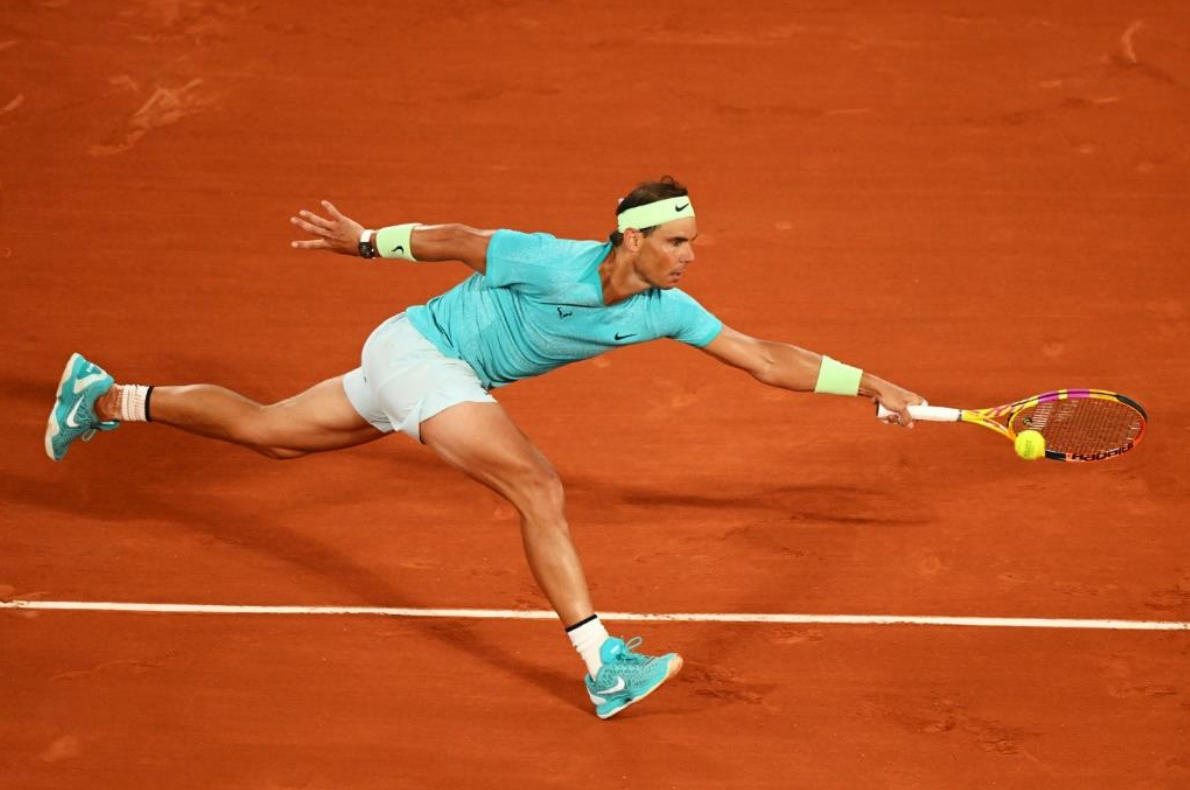
With the rise of overuse injuries across many sports, including tennis, a well-designed strength and conditioning (S&C) program has never been more important.
Too often, players, parents, and coaches push for more on-court training until injury occurs. The athlete rests, perhaps does some basic physio, and then returns to the same training volume they couldn’t handle before. This cycle of overtraining, overuse, and injury is common among youth athletes. The good news is that it can be prevented. This article explains why S&C can help athletes reduce injuries, enhance performance, and get more from their on-court technical training.
With this in mind how can we reduce injury risk, improve speed, power and agility as well as allow the athlete to train more hours on court? The critical factor which ties all these things together especially for developing athletes is strength. With a complete program focusing on a strength and movement foundation first, tennis players will be set up for success long term.
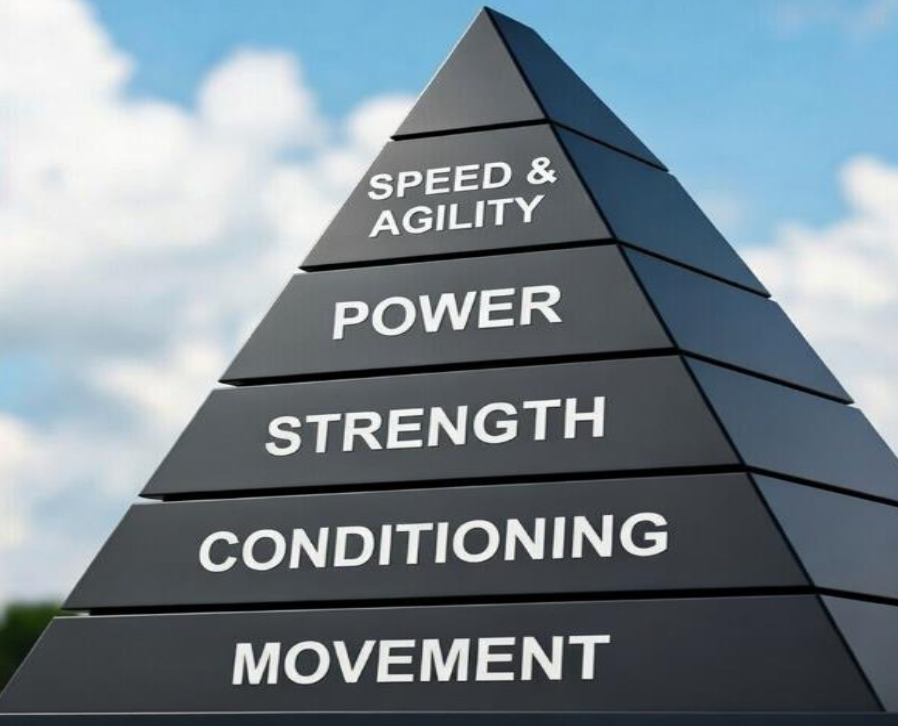
Athletic Development Pyramid
Injury Reduction
For youth Tennis athletes, the most common overuse injuries are Tennis elbow and shoulder impingement as a result of overuse. These are most likely due to more tennis training without having the proper progression of strength and mobility in the thoracic spine and shoulder. Most complete S&C programs will address and build upon this for tennis athletes focusing on:
• Thoracic Extension and Rotation
• Shoulder Internal and External Rotation
• Ribcage and Pelvis dissociation
• Hip Mobility
• Total Body Strength and Power

Good example of pelvis and ribcage dissociation (thoracic rotation opposite to hips)
Strength training is vital because it reduces asymmetries between the dominant and non-dominant sides and increases joints’ capacity to tolerate more training. A well-rounded program that emphasizes horizontal and vertical pressing and pulling as foundational movements will develop most muscle groups. Additional work targeting the rotator cuff, shoulder strength, and stability will make the program more complete and enhance robustness in the shoulders, elbows, and wrists addressing the specific demands of tennis.
Train more strength to train more Tennis?
If there could be one single benefit from strength training it would be the increased robustness so that the athlete can handle more technical training. Some parents may worry that gym work takes away from on-court practice, but in reality it can lead to more on-court training in the long run. While on-court practice is essential for technical development, following a structured strength and conditioning program creates a more balanced training program allowing the athlete to handle the stress and impact of on court training.
Take two athletes: one stronger than the other but matched for skill and training hours. Over time, the stronger athlete will be able to handle more training hours, which can theoretically lead to further gains in skills. The accumulated impact of hard training days on court loads the body’s joints, tendons, and ligaments. Due to this, injury risk is higher for the weaker athlete and their on-court time may be more heavily reduced compared with the stronger athlete.
Therefore, the solution would be to build a stronger foundation to help the athlete tolerate this impact and protect their joints. In addition to the previously mentioned upper body program, a foundational strength program focusing on squats, lunges, hinges, groin, glutes, ankle strength and stability will help the athlete develop the robustness required for on court demands of tennis. In summary, improved strength and fitness supports more effective technical training and skill development than if they performed only tennis training.
Improved Performance
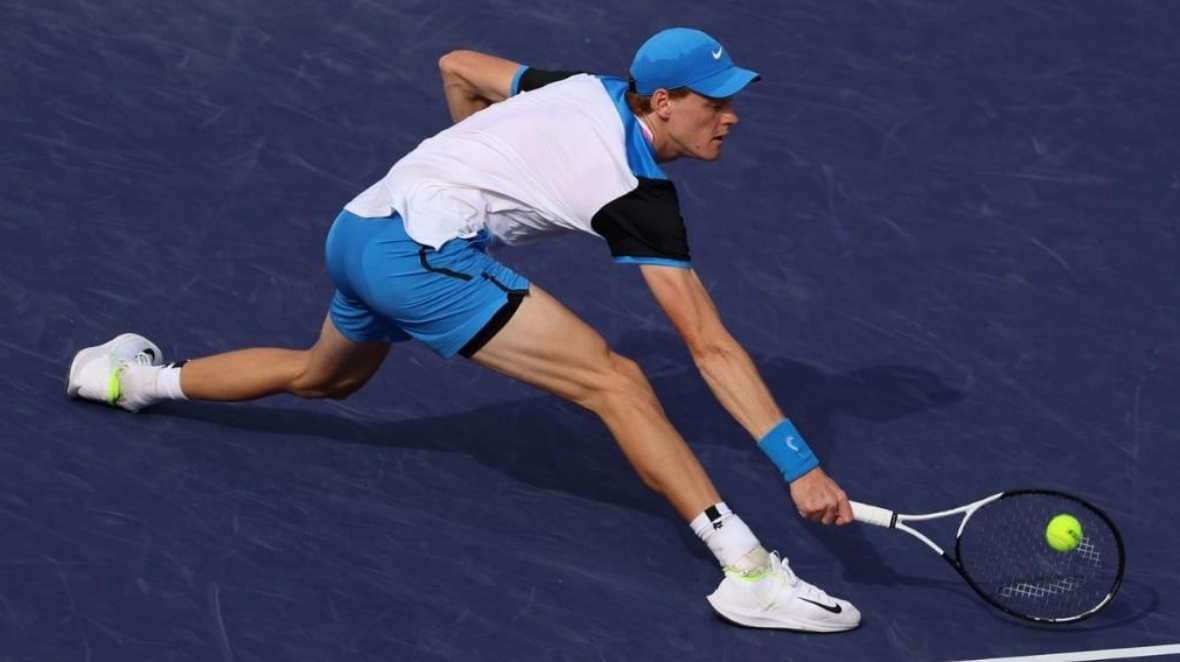
Ofcourse improving performance on court would be a vital reason for S&C training. A well-structured program can allow the athlete to improve the following:
• Increased speed and agility
• Increased strength and power for serves
• Improved stability and control for movement quality and efficiency
• Improved endurance for long grueling matches
• Faster recovery between sets
A holistic program would encompass a variety of strength and power exercises. Building a strong general foundation of squats, lunges, hinges, pushes, pulls, rotational and stabilizing exercises will help in most athletic movements. From here we can then work towards more “specificity” such a with certain power exercises, lateral movements, and on court speed and agility training. Cossack squats and variations are a particular favorite of mine as this will improve lateral and single leg strength as well as hip and groin mobility which is specific to tennis.
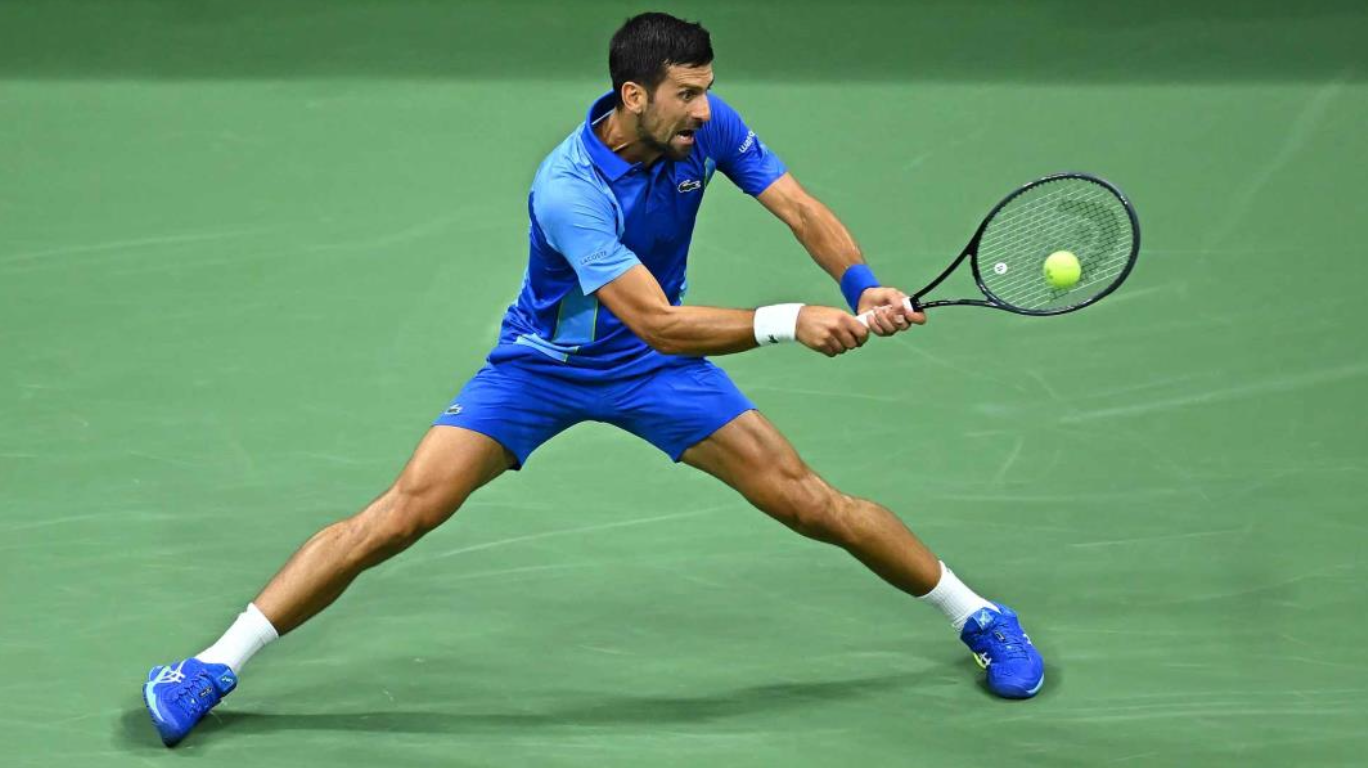
Example of hip and groin mobility in required in Tennis
In the following image, we see a pyramid of exercise classifications. Too often, athletes and parents focus on the top of the pyramid “special exercises” or specific training while neglecting the foundation. Many athletes with little or no strength training background are not limited by specificity, since all of their tennis training can be considered sport specific. However, focusing too early on the top of the pyramid naturally limits the potential for improvement.
By prioritizing the foundation first, athletes can raise their ceiling and eventually reap greater benefits when they progress into more specific training.
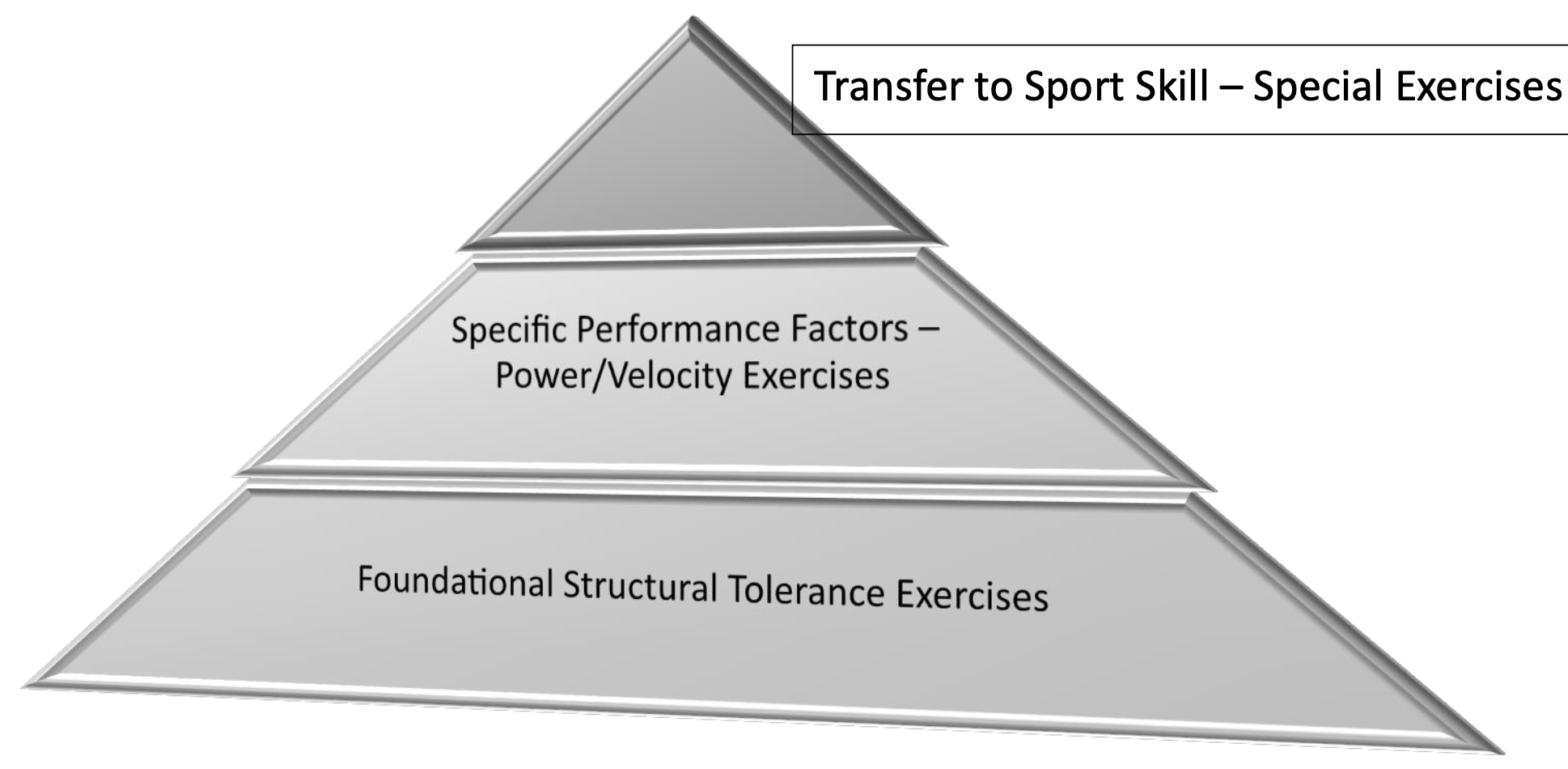
Exercise Hierarchy Pyramid
To guide those who want to take their tennis to the next level but aren’t sure where to start: prioritize foundational movement, strength, and stability. Skipping foundational steps will hinder development and can increase injury risk. When athletes focus on building a solid base, they’ll feel more confident, robust, and powerful, and they’ll get the most out of their on-court training.
