
Pondering Peptides
Separating Biological Promise from Marketing Hype
For the audio version of this blog, click here.
"Never tell me the odds!" - Han Solo, The Empire Strikes Back
In the current modern biohacking landscape, few topics are generating as much noise, excitement, and uncritical worship as peptides. Marketed as injectable or ingestible fountain-of-youth secrets, recovery miracles, and cheat codes for building tissue, peptides have leapt from obscure biochemical labs straight into popular podcast episodes, many commercial clinics, and high-performance arenas.
At Joint Dynamics, we believe in a deeper analysis of what works and what works best for your body, hence my request for 6 to 7 minutes of your reading time as opposed to a 30-second post on social media. This article should leave you adequately informed to make more optimal decisions moving forward. The question is - Are peptides a revolutionary medical frontier, or is aggressive marketing simply outstripping real-world science?
What Actually Is a Peptide?
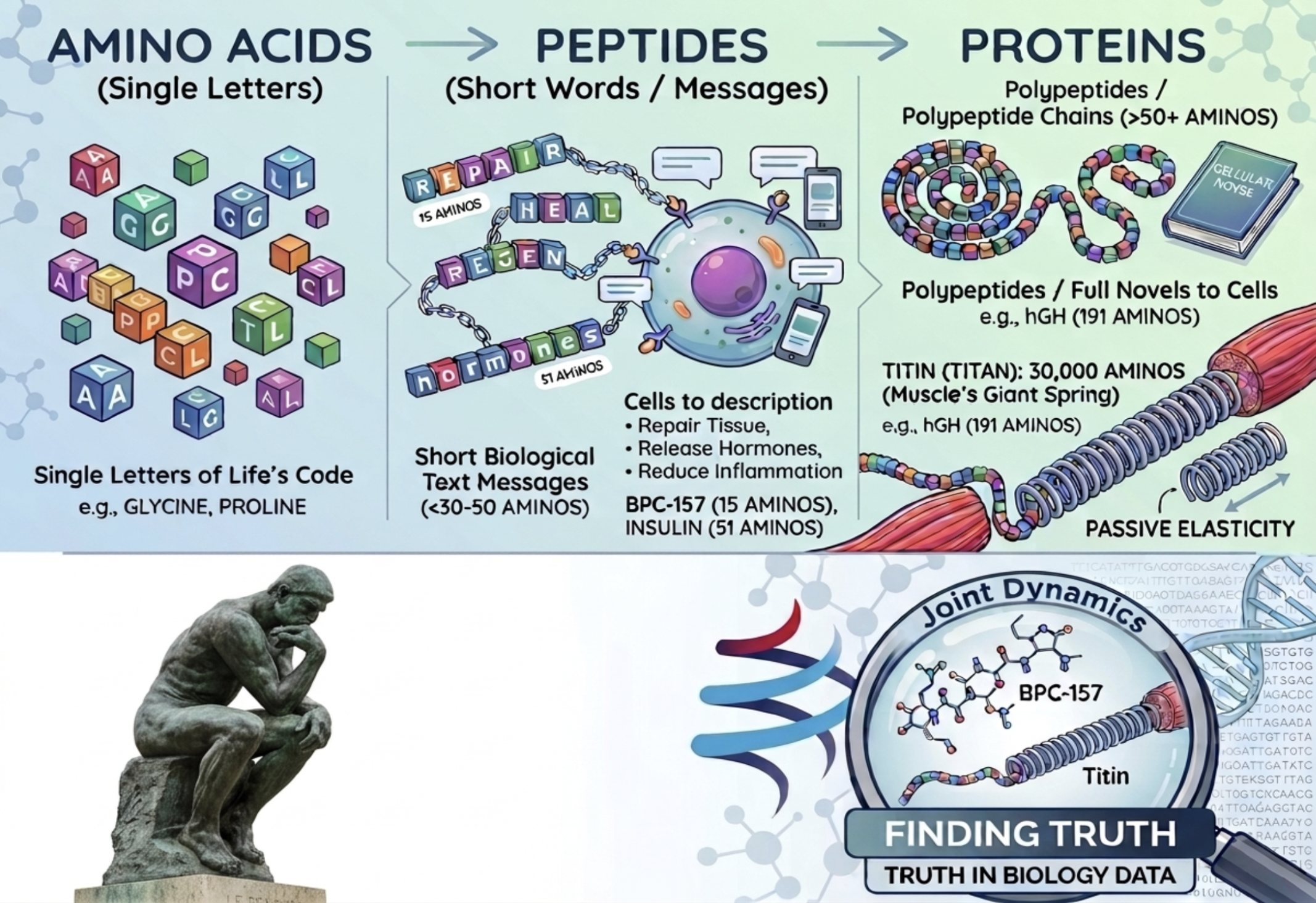
To understand peptides without getting lost in technical jargon, picture your body's molecular language:
Amino acids are the individual letters of the alphabet.
With amino acids as letters: peptides are the short, precise words they spell out, typically consisting of fewer than 30 to 50 amino acids linked together.
Once a chain exceeds 50 amino acids, it becomes a polypeptide (a chapter or detailed message).
When one or more polypeptides fold into a functional 3D structure, you get a protein: the complete biological novel of life.
Simply put, if single amino acids are individual letters and proteins are full-length novels, peptides are short, precise words that send direct biological text messages to your cells prompting them to execute specific tasks like repairing damaged tissue, releasing key hormones, or turning down the volume on systemic inflammation.
To appreciate the scale, consider Titin, often introduced as the largest known protein in the human body. Found in skeletal muscle tissue, Titin is an astounding 30,000 amino acids long (give or take 1,000), acting as a giant molecular spring that gives muscle its passive elasticity. Human growth hormone, secreted by your pituitary gland to stimulate cellular growth and regeneration, is a full protein containing 191 amino acids.
Peptides, by contrast, are tiny snippets. As mentioned, because of their small size, they act like biological text messages sent directly to specific cell surface receptors, requesting cells to execute a defined task such as releasing a hormone, synthesizing collagen, or dampening inflammation.
*Real-world effects depend on whether the peptide reaches the right tissue in an active form.
The Gold Standard: Proven Peptides in Modern Medicine that you already know
Peptides are not novel internet compounds; medicine has utilized them for over a century. For example -
Insulin (51 amino acids): Discovered in 1921, this peptide hormone binds cell receptors to clear glucose from the blood, reliably lowering blood sugar levels in diabetic patients.
Oxytocin (9 amino acids): Synthesized in 1953 (earning its creator a Nobel Prize), this classic peptide binds to specific uterine and neural receptors to induce labor, manage postpartum bleeding, and regulate biological bonding.
GLP-1 Receptor Agonists (e.g., Semaglutide/Ozempic): Synthetic peptide analogs that mimic human gut hormones to slow gastric emptying, optimize metabolic signaling, and dramatically enhance satiety that effectively treat type 2 diabetes and chronic obesity.
If assessing GLP-1 receptor agonists as an entire class, the absolute first lab-created version successfully approved for human medical use was exenatide in 2005, which consists of 39 amino acids
The Unverified Class: From Petri Dishes and Rodents to Podcasts
"People do not buy goods and services. They buy relations, stories, and magic." - Seth Godin
Selling hope is often the most lucrative product in health and fitness. When struggling with chronic joint pain, a damaged ligament, or aging muscles, the promise of a “Wolverine level” of tissue repair via peptides is deeply alluring.
For “rising star” peptides such as the “Wolverine stack” combining BPC-157 with TB-500 for tissue repair, or the “GH Secretagogue Stack” of CJC-1295 and Ipamorelin for enhanced growth hormone, or even Epitalon’s suggested abilities for lifespan extension there simply is not enough current evidence to ensure success or safety. At the time of writing (September 2026) it is very safe for me to say that marketing has sprinted miles ahead of the actual evidence. Safety and efficacy in humans are severely lacking as the beneficial claims of these peptides are backed by success in a petri dish, in rats and mice, or from observational research.
The Casino or the Classroom: How to Choose
None of this means these molecules are completely useless - their underlying biology holds genuine promise, it’s a very exciting field of science. However, because we simply don't know their long-term safety profile or true effectiveness in humans, you are navigating pure uncertainty. In short, you are gambling.
To evaluate the claims surrounding peptides, doctors, sports scientists and clinical researchers use a few reality checks to separate genuine biology from marketing.
For example:
A Raw Molecule Is Not a Finished Medicine - A raw peptide or “Research Use Only” (RUO) powder isn’t the same thing as an approved, pharmaceutical-grade therapy. Approved medicines require validated manufacturing and quality systems, safety testing, and clinical evidence in humans. RUO products are not regulated as human medicines, so buyers shouldn’t assume pharmaceutical-grade purity, sterility, dosing accuracy, or clinically demonstrated safety and effectiveness.
Testimonials Aren't Proof (The Power of Natural Healing) - Testimonials can reflect real improvement, but they do not prove that an administered peptide caused the change. When people start an intervention during a flare-up or a worst period, symptoms often improve partly due to natural recovery and a biological reality termed “regression to the mean”. Expectation and placebo effects can also contribute. Without blinded, controlled human trials, the safest current conclusion is uncertainty, not proof.
In general, younger people often heal faster than older adults, but healing differences vary widely by injury, age, training load, quality of rehab, and overall health. This is another reason why testimonials are hard to interpret: many improvements track natural recovery over time.
Beware the "Swiss Army Knife" Red Flag - If a product is marketed as fixing many unrelated conditions at once, especially with little high-quality human evidence, it should be treated with a dose of “healthy” skepticism. Real therapies are usually supported by mechanism plus clinical outcomes for specific indications, not broad promises for everything.
Missing Human Evidence - Many approved therapies have been tested in humans for safety and efficacy, often with evidence about mechanism (or at least consistent clinical benefit). By contrast, many internet peptides are sold on benefits established in a petri dish or from rodent studies, without the same level of human clinical trial evidence to support the specific claims made in marketing.
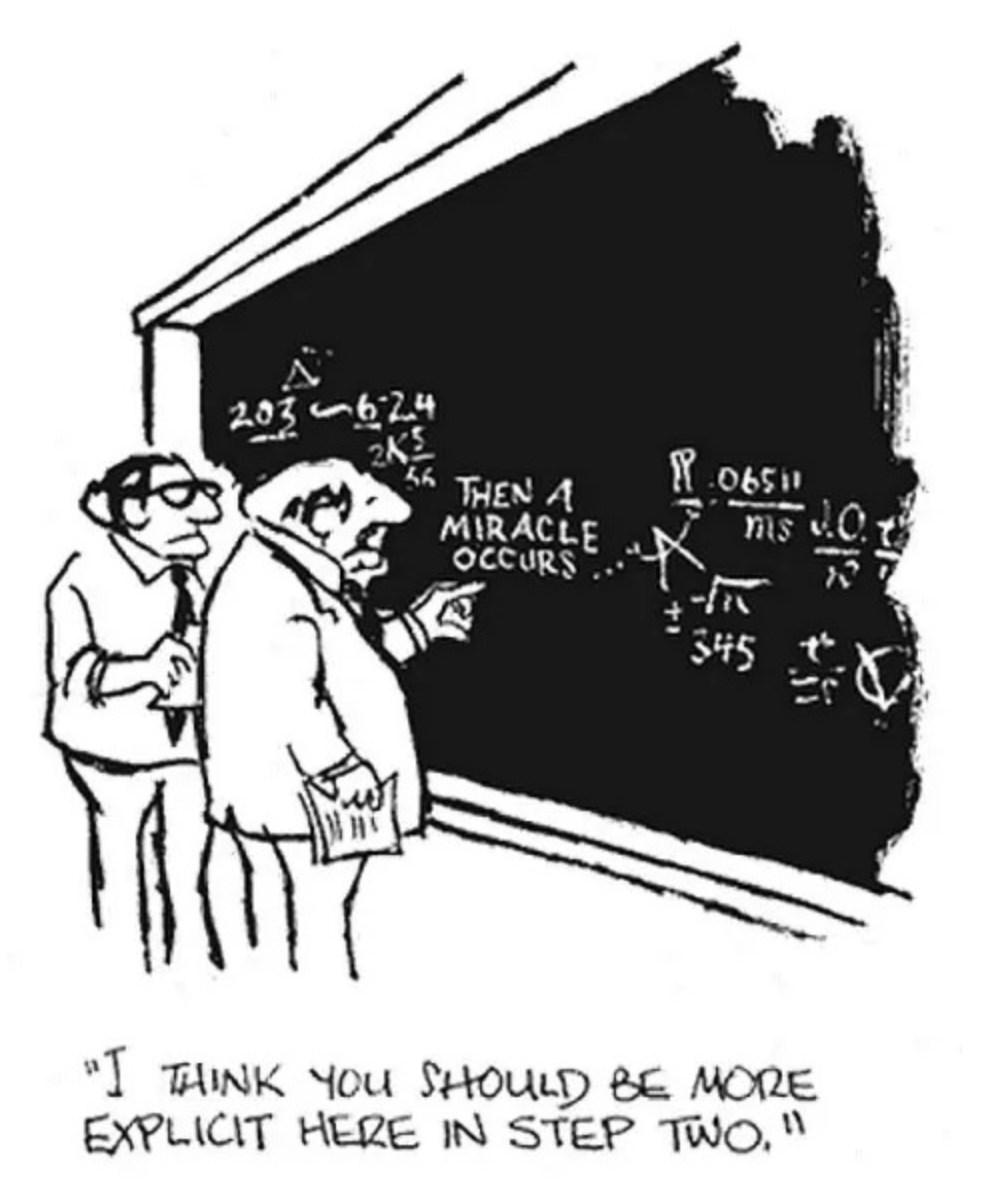
4 Science-Backed Strategies to Optimize Your Biology Naturally
"The primary key to human longevity is not finding a modern quick fix, but mastering fundamental inputs." - Prof. Tim Spector, Epidemiologist
Before seeking out unproven complex synthetic compounds, optimise the biological inputs that naturally elevate your body's healing peptides and growth factors:
Build the Muscle Engine (Resistance Training): Adequately heavy compound resistance training naturally stimulates endogenous growth hormone release and triggers the muscle secretion of beneficial myokines (like Brain-Derived Neurotrophic factor/BDNF and Irisin) that support systemic tissue repair and brain health.
Prioritize Sleep and Recovery: Over 70% of your daily pulse of natural human growth hormone is secreted during deep, non-REM sleep. Aim for 7 to 9 hours of uninterrupted sleep to maximize cellular restoration and growth.
Provide your Body with Quality Structural Raw Materials: Supply your connective tissues with the building blocks of collagen synthesis from the foods you eat. Ingesting proline, glycine, lysine, and Vitamin C via whole foods like bone broths, high-quality animal proteins, citrus fruits, and bell peppers (for example) gifts your body the exact biological toolkit it needs to naturally repair tissue, rebuild collagen, and strengthen your joints from the inside out.
Leverage Environmental Stressors (with a Worthy Wildcard): Incorporate brief cold exposure or regular sauna sessions. While human data on sauna-induced heat shock proteins is robust, cold exposure acts more as a calculated wildcard. Appropriate cold exposure creates a low-risk, deliberate disruption to homeostasis that triggers a measurable release of stress-adapting hormones, sharpens nervous system response, and helps downregulate inflammatory cascades.
In medical research, rodent models serve an essential purpose: they establish basic biological plausibility, reveal potential mechanisms of action, and flag early safety concerns. They are the initial stepping stone of preclinical science. However, a mouse is not a human navigating our complex metabolic pathways, systemic inflammation, and decades of lifestyle variables. Success in a rodent trial should not be a final green light to start self-administering a compound. Rather, it is simply an invitation to begin the multi-year, multi-phase human clinical trials needed to prove both real-world efficacy and long-term safety.
Pointing out this gap is not a dismissal of peptides. The underlying science behind many of these short amino acid chains is genuinely fascinating, biologically plausible, and holds immense promise for the future of regenerative medicine, tissue repair, and human performance.
However, a massive canyon currently exists between what is scientifically plausible and what is proven in human bodies.
Navigating that canyon requires deep discernment, particularly regarding quality and sourcing. Receiving a pharmaceutical-grade, pure peptide therapy prescribed by a licensed physician within a regulated clinical trial is a completely different risk profile than buying a mystery powder labeled "Research Use Only" off the internet or taking a recommended vial from a guy at the gym. Unregulated gray-market peptides carry risks of contamination, improper dosing, and even unknown side effects.
Ultimately, staying open-minded about medical innovation shouldn't mean leaving critical thinking at the door. Peptides may very well shape the future of health and longevity, but they are not a substitute for the non-negotiables that drive the vast majority of human improvement, repair, and vitality: structured movement, nutrient-dense whole foods, quality sleep, and intentional stress management.
Honor your biology, demand robust human evidence when injecting anything into your body, and apply healthy discernment to your health, your hopes, and the relentless marketing promising quick-fix vitality. Don't let the noise of becoming 'superhuman' distract you from the simple habits that keep you human.
"No great thing is created suddenly, any more than a bunch of grapes or a fig. If you tell me that you desire a fig, I answer that there must be time: let it first blossom, then bear fruit, then ripen." - Epictetus
